


History of LANs
1960s: Major universities produced many computers, creating a need for fast interconnections between them.
1970: Lawrence Laboratory documented their “Octopus” network as a solution for connecting computers.
1974: Cambridge Ring was developed by the University of Cambridge but did not become a successful commercial product.
1973–1975: Ethernet was developed by Xerox PARC and later patented (U.S. Patent 4,063,220).
1976–1977: ARCNET was developed by Datapoint Corporation and first installed at Chase Manhattan Bank in New York.
1980s: The spread of personal computers based on CP/M and DOS increased the need for LANs in offices and institutions.
mcorper mattis, pulvinar dapibus leo.
Development of Standards
Initially, LANs were developed to share expensive resources such as disks and laser printers. In 1983, experts called this period the “year of the LAN.”
However, there was a challenge with physical and network protocol compatibility, as many operating systems and network cards were different. Novell NetWare provided a stable solution by supporting multiple types of cards and cables, dominating the market until the mid-1990s, when Microsoft introduced Windows NT Advanced Server and Windows Workgroups.
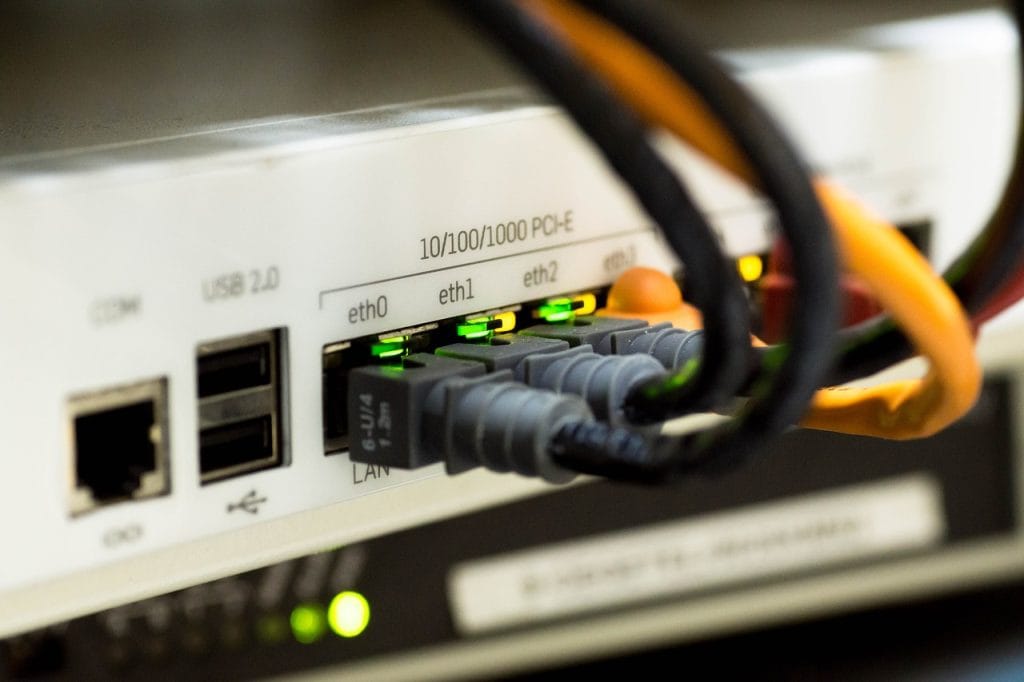
Cables and Modern Technologies:
Early LANs primarily used coaxial cables.
Twisted pair cables were used by IBM for Token Ring and later for StarLAN and 10Base-T.
Fiber-optic is used for commercial applications.
Wireless LAN (Wi-Fi) is now standard in residential areas and for mobile devices.
Technical Aspects of LAN:
Ethernet covers the Data Link Layer and Physical Layer.
TCP/IP protocol is the standard for higher layers.
Small LANs usually consist of a switch connected to a router and modem for Internet access.
Larger LANs use switches, firewalls, routers, load balancers, and sensors.
VLAN and QoS help manage traffic and resource allocation.
LANs can connect to other networks or the Internet via VPN or dedicated lines.